The Art Where a Object Is Darker in Front of the Sun Light
What Is Chiaroscuro?
Chiaroscuro refers to the use of light and nighttime to create the illusion of three-dimensional volume on a flat surface. The term translates to "light-dark"; chiaro pregnant brilliant or clear and scuro meaning dark or obscure.
The term is likewise used in a more than narrow sense to draw artworks which display an extreme contrast between light and dark, like the painting beneath.
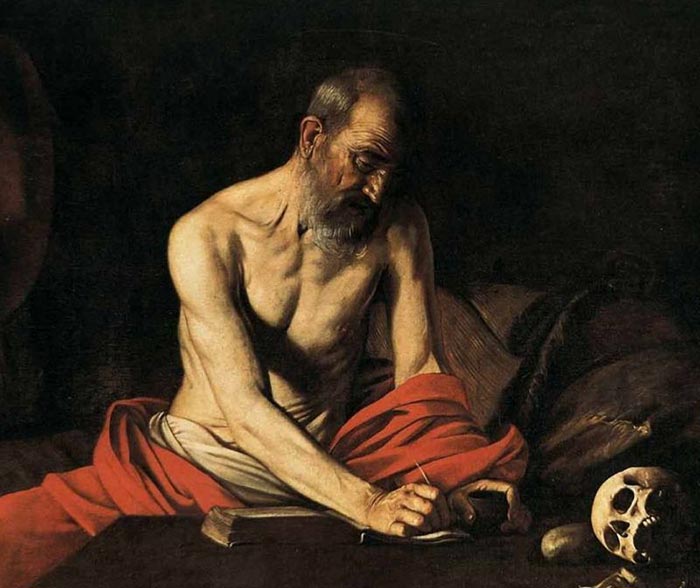
Michelangelo Merisi De Caravaggio, Saint Jerome Writing, 1607
Ancient Roots
Chiaroscuro can be traced back to the piece of work of Apollodorus Skiagraphos, a Greek painter who used hatched shadows to propose book. None of Skiagraphos' works survived, but examples of his skiagraphia or "shadow-painting" technique can exist seen in other Hellenistic artworks such equally the "Stag Hunt," a 4th century BCE carpeting mosaic from a wealthy Macedonian domicile.
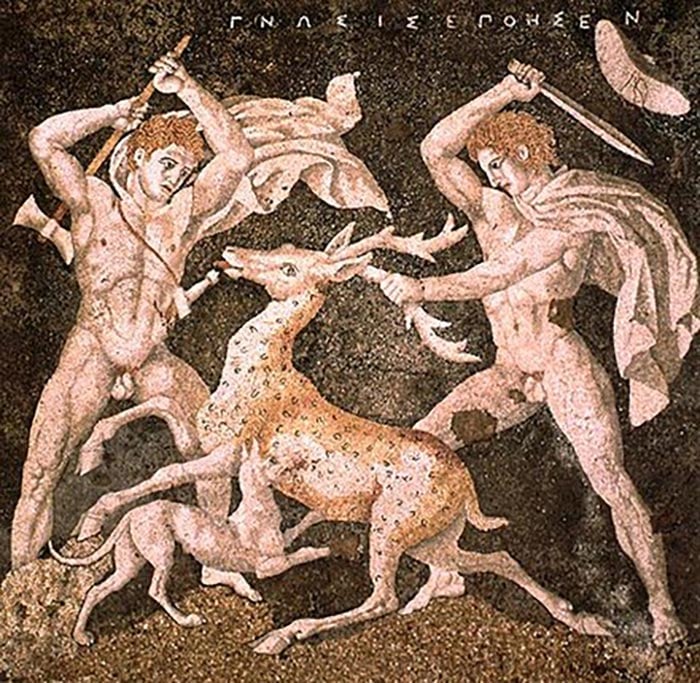
Gnosis, Stag Hunt Mosaic, c.300 BCE
Chiaroscuro During the Renaissance
By the 15th and 16th centuries, the interest in all things classical saw Renaissance artists prefer and improve on before shading techniques. The outset Renaissance master to develop existing shading techniques to achieve a true chiaroscuro effect was Leonardo da Vinci. Da Vinci brought life and book to his drawings, starting with the darks on colored paper, then moving toward the lighter tones, and finally adding the highlights, normally with white gouache or chalk. Beneath is a great example of this. Notice the careful rendering in value from dark to calorie-free.
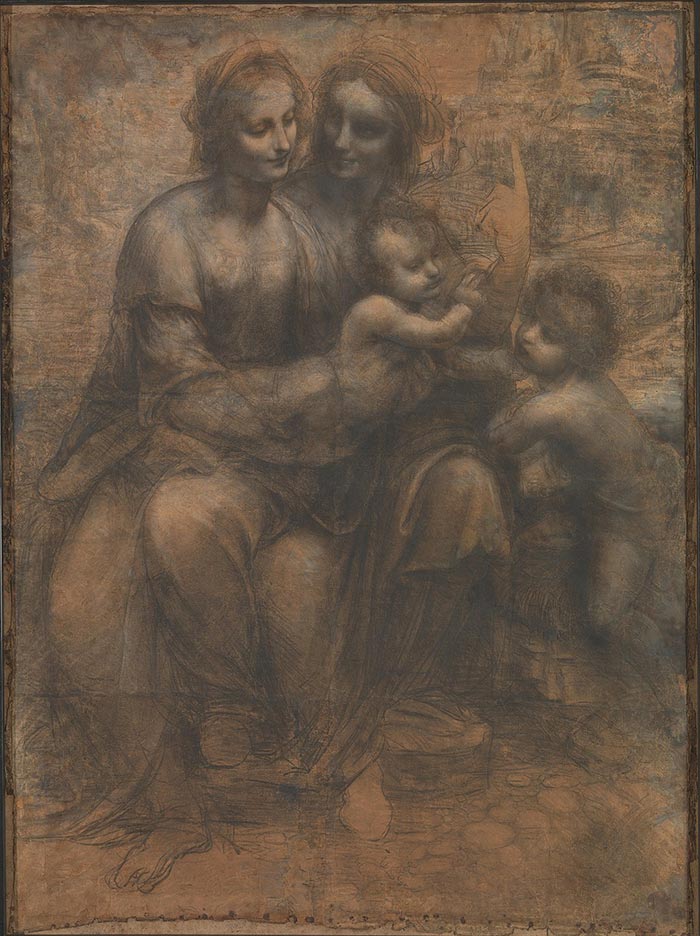
Leonardo da Vinci, Virgin and Child with St Anne and John the Baptist, c.1500 CE
Da Vinci used charcoal or blackness chalk to sketch the subjects on brown tinted newspaper. He created the illusion of shadows (in the folds of their clothing, on their faces and necks, etc.) by gradually building up lighter and lighter layers of chalk. He used white chalk to highlight areas of importance, such as the child and the other subjects' faces. If you await at the bottom of the artwork, you tin can see parts of the unfinished drawing, without whatever rendering.
Development of Oil Paint
Renaissance artists were interested in reproducing the world they saw around them. Architect Filippo Brunelleschi'due south discovery of linear perspective gave artists a formula to create the illusion of depth and realistic proportion on a flat surface. But an every bit important discovery during this period was the benefit of oil paint. Earlier the Renaissance, the most pop medium was tempera paint, a quick-drying medium created from egg yolk. The medium is difficult to blend due to its quick-drying fourth dimension and it is not suited to layering because of its opacity.
Oil paint, which uses pigments ground in an oil medium such as linseed oil, dry more slowly. This tiresome drying time, combined with its translucence, make information technology possible to build up thin layers of paint (known every bit glazing). This made it much easier for Renaissance artists to blend and build upward gradual tones of colour - helping chiaroscuro become a feasible technique to model realistic forms.
Caravaggio
The 17th-century Italian painter Michelangelo Merisi da Caravaggio took chiaroscuro to the extreme, often blacking out large portions of the background and brightly illuminating big foreground subjects. This combination of using high contrast with a unmarried focused light source had an incredibly dramatic issue.
In the painting below, the subjects are illuminated from a single lite source coming from the right of the painting. The drama in the scene is intensified past the stark dissimilarity between the deep shadows and the warm highlights and midtones. The light focuses your attention on the subjects seated at the tabular array.
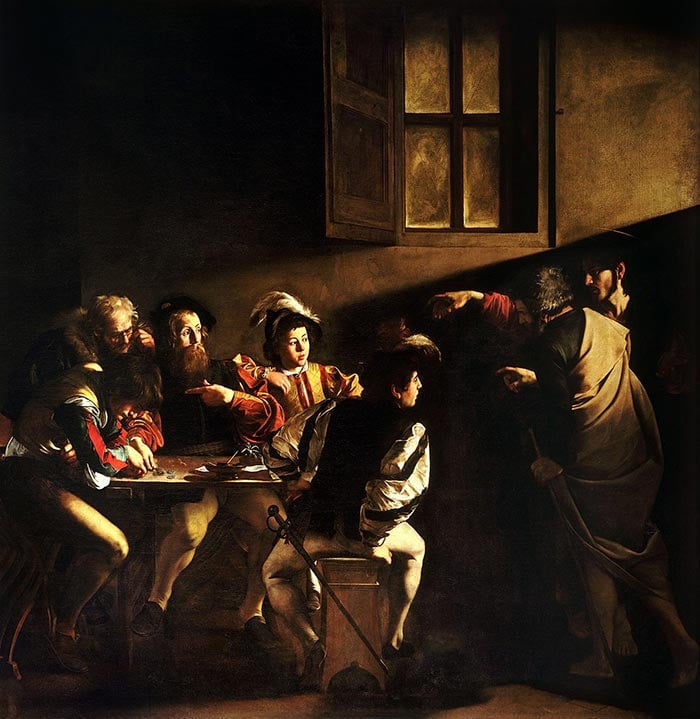
Caravaggio, The Calling of Saint Matthew, 1599-1600
Tenebrism
The apply of big patches of blackness background combined with brightly illuminated subjects is so closely associated with Caravaggio'south work that it is termed caravaggism. Some other term for this manner of chiaroscuro is tenebrism, which comes from the Italian term tenebroso, significant night, gloomy or mysterious.
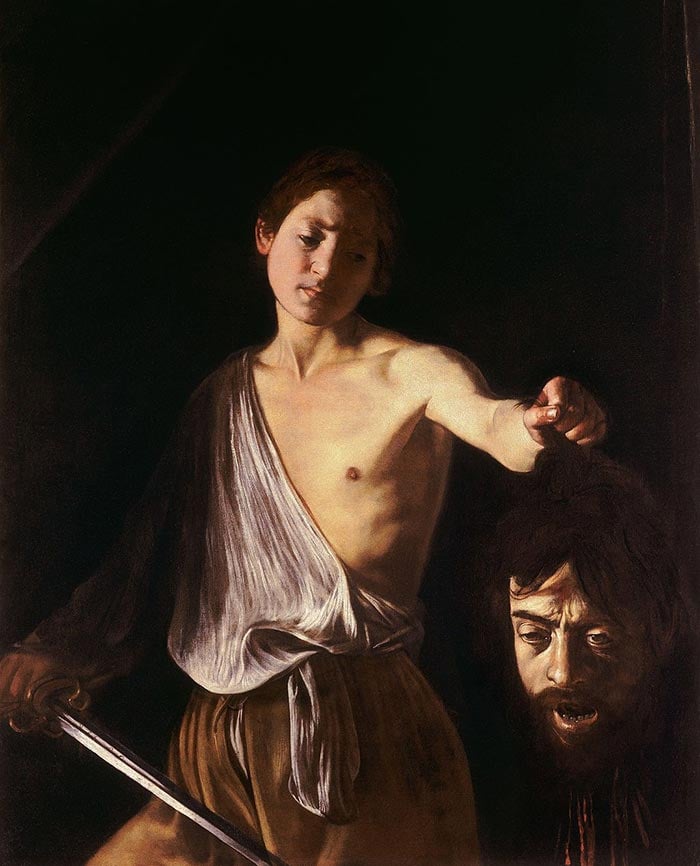
Caravaggio, David with the Caput of Goliath, 1610
In the painting higher up, David takes on a luminous appearance as calorie-free falls on him from the left of the painting. He was painted with soft tones and edges. Also, notice how the parts of David which are in shadow gently alloy in with the black background.
By contrast, Goliath'southward severed head, with ribbons of blood however streaming from his cervix, is thrust, slightly over-scale, into the lower right foreground. The light falls more direct on Goliath, harshly illuminating the shadows of his hair, his creased forehead and his sunken eyes.
With the painting placed just to a higher place centre level, a viewer standing in front of information technology volition be looking nearly directly into the face of Goliath'southward green-tinged, oversized face.
Caravaggisti
Caravaggio'south tenebrism was so successful that many enthusiastic artists began to mimic his mode. These artists became known every bit the "Caravaggisti." The Caravaggisti used a stark combination of dark and light for several purposes - to model three-dimensional volumes, to depict attending to certain areas of the painting and to create a sense of drama.
Below is an example of Carvaggisti work. The subject, Judith, holds her manus out to block the light that streams in from the left. The consequence is a stark curve of shadow cast confronting her own confront.
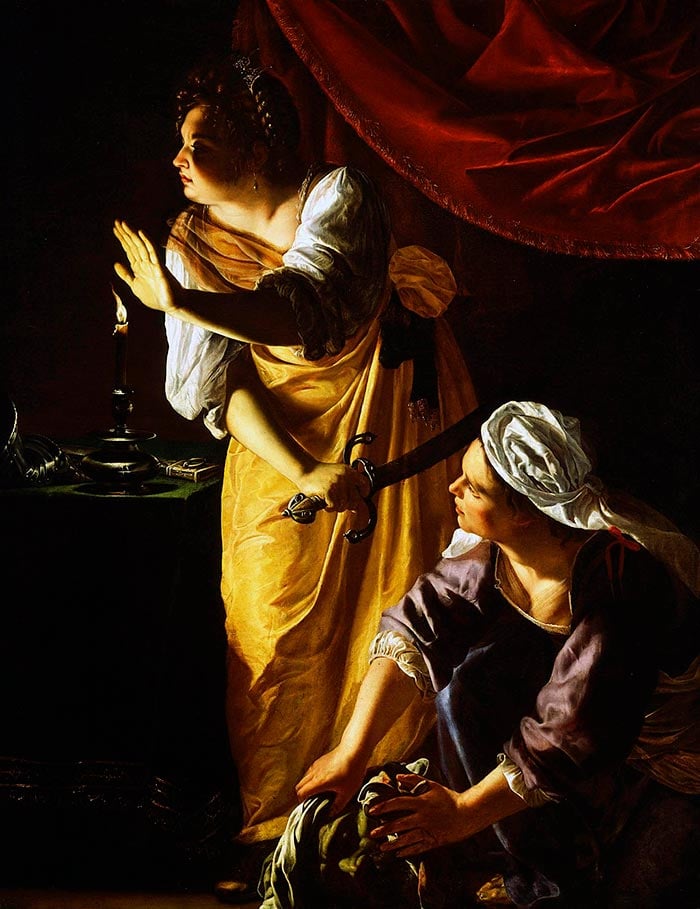
Artemisia Gentileschi, Judith and her Maidservant, 1625
Dutch Chiaroscuro
Other artists took a more frail approach to chiaroscuro - using it to create a calm and reflective mood. The Dutch master Rembrandt van Rijn is renowned for his subtle handling of the chiaroscuro technique.
In the self-portrait below, Rembrandt used painterly brushwork to explore the human relationship between light and shadow. Unlike many other portraits, most of Rembrandt's face is in shadow, with only 1 side of his face slightly exposed to light. Also, the background is painted with midtones, rather than deep black similar many of the other paintings in this postal service.
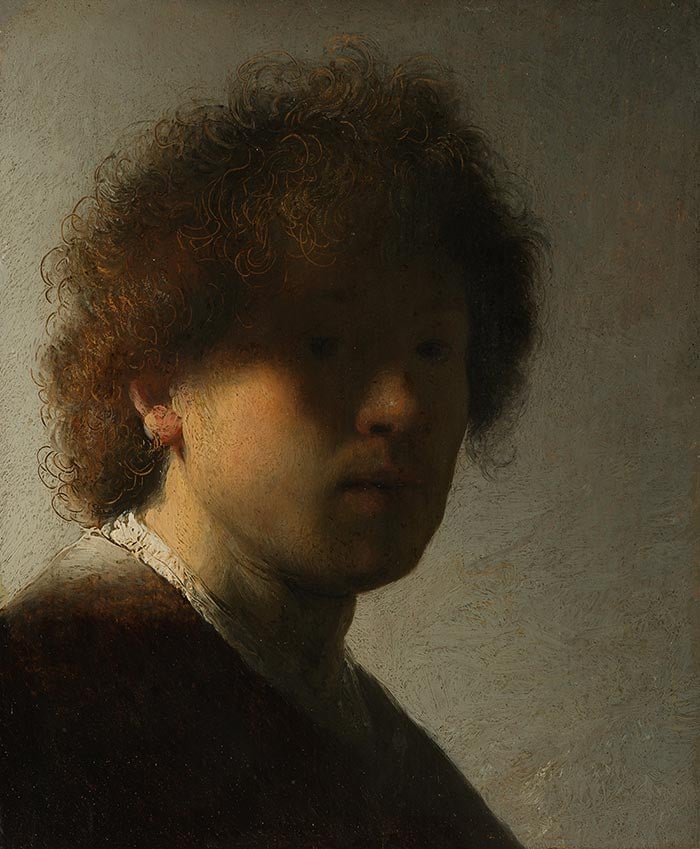
Rembrandt, Self Portrait as a Beau, 1628
Gerard van Honthorst is another Dutch master who explored the use of chiaroscuro. In the painting below, the subjects are brought forward from the darkness and your attention is focused on the kid, who appears to be glowing with light. The other subjects are basked in a more than subtle light, with the man in the background only just emerging from the darkness.
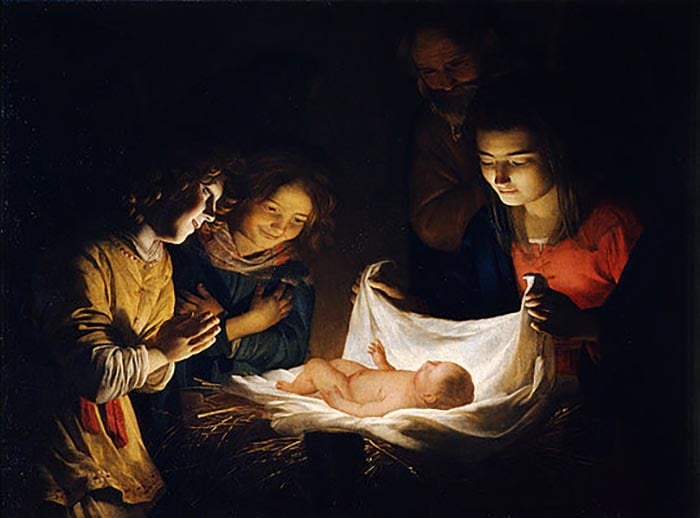
Gerard van Honthorst, The Admiration of the Child, 1620
Chiaroscuro by Candlelight
French artist Georges de La Tour often used candles as the master lite source for his paintings. In the painting below, he used candlelight bouncing off a mirror to illuminate a seated Mary Magdalene.
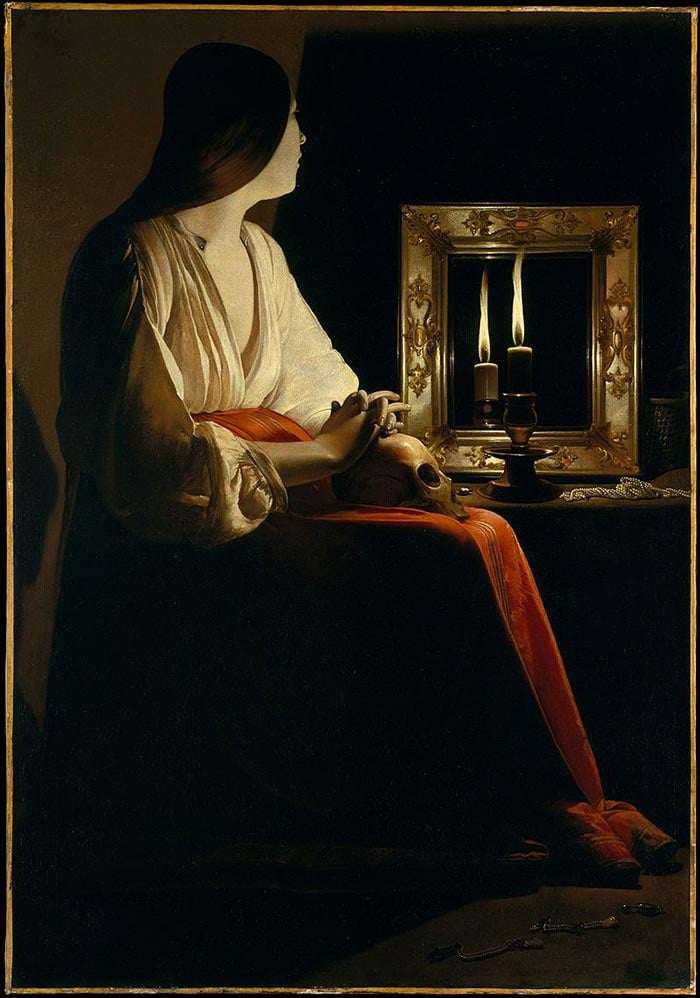
Georges de La Bout, The Penitent Magdalene, 1625-1650
In this painting, you lot can feel the warmth of the candlelight. The paper in the subject field's hand glows like burnished gold.
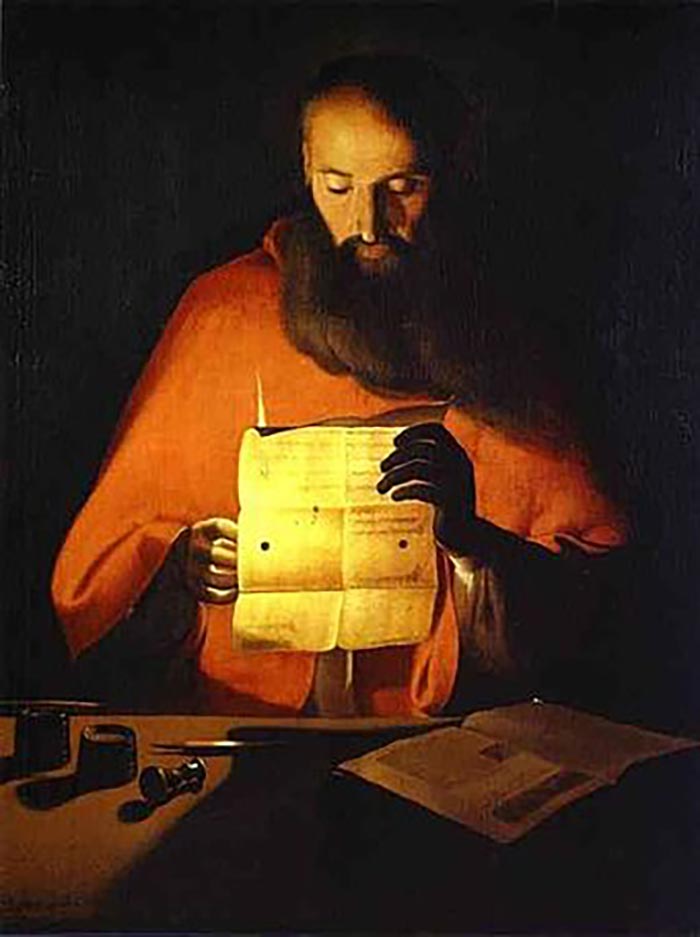
Georges de La Bout, Saint Jerome Reading
Modern Chiaroscuro
There are many other artists who made artistic and achieved utilise of chiaroscuro.
Joseph Wright of Derby used chiaroscuro when painting scenes of scientific involvement during the industrial revolution. In his painting below, an orrery (a mechanical model of the solar arrangement) is illuminated by an oil lamp that is placed at the eye of the model to represent the dominicus.
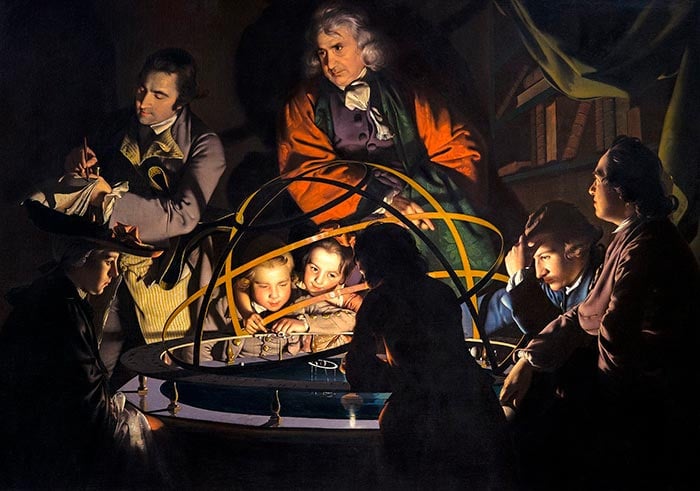
Wright of Derby, The Orrery, 1766
English language artist Sir Joshua Reynolds used chiaroscuro to lend a regal quality to his eighteenth-century portraits.
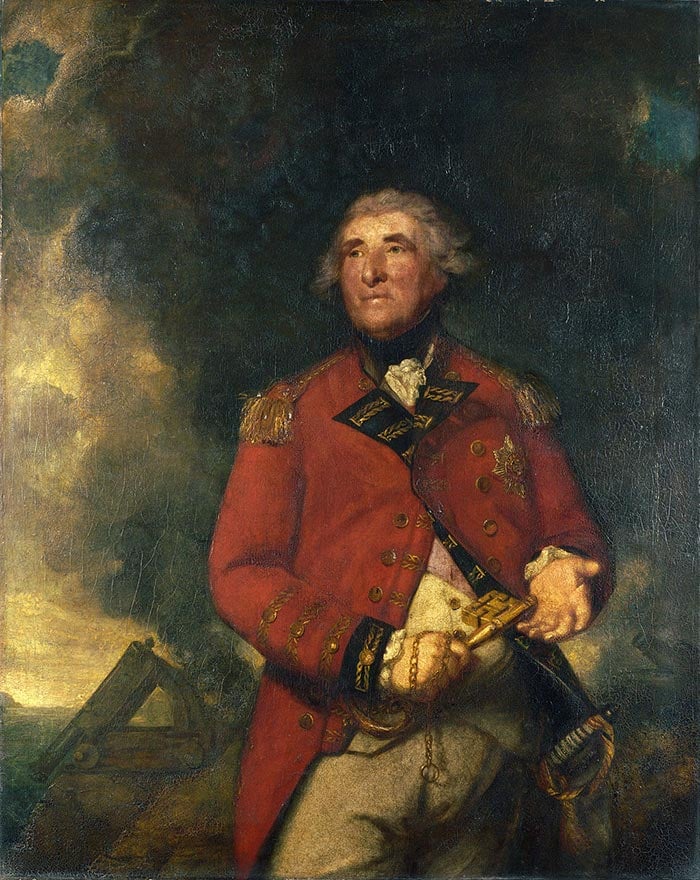
Joshua Reynolds, Lord Heathfield, 1787
Francesco Goya adopted Caravaggio'due south more than dramatic tenebrism to depict the tension and heightened emotion associated with modern warfare.
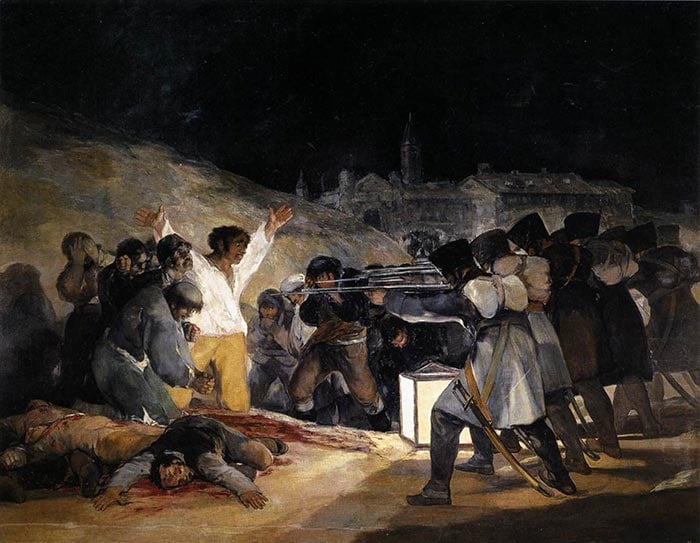
Goya, The Tertiary of May 1808, 1814
Chiaroscuro is too used in a variety of other mediums, such every bit photography and cinematography.
Key Takeaways
- Some of the shading techniques used for effective chiaroscuro include hatching, shading with parallel lines and layering tones of the aforementioned colour.
- For edifice up tonal gradations, information technology is usually most effective to work dark to light.
- For more drama, you may desire to consider using only i stiff light source.
- Our eyes are naturally fatigued to the lightest areas, so these tend to exist the focal points in the painting.
- The level of contrast between lite and dark helps decide the mood of the painting.
- Tenebrism, which refers to specially high contrasts between the nighttime and light areas of the image, can be used to create a strong sense of drama.
- Compositional choices, such as positioning the subjects prominently in the foreground, tin heighten the effects of chiaroscuro.
(If y'all want to learn more about color, brand sure to grab my gratuitous Colour Theory Crook Sail).
Learn More
Thanks for Reading!
Thanks for taking the time to read this postal service. I appreciate information technology! Feel free to share with friends. If you lot want more painting tips, check out my Painting Academy class.
Happy painting!

Dan Scott
Depict Paint Academy
0 Response to "The Art Where a Object Is Darker in Front of the Sun Light"
Post a Comment